
Preview The Strongest Battlegrounds Major Update: Speed Ninja Sonic Rework, Perfect Parry Mechanics, And 2026 Ranked Arena Season
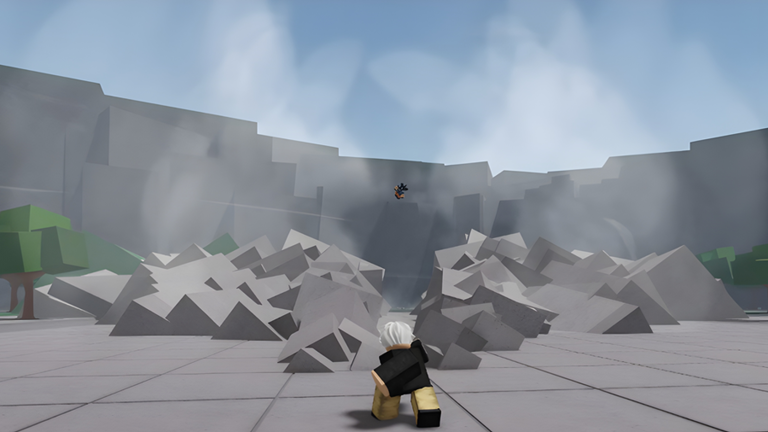
Within the fiercely competitive landscape of third-person martial arts combat arenas on Roblox, The Strongest Battlegrounds (TSB), masterfully crafted by the Yielding Arts development team, reigns as an unassailable titan. Inspired by the legendary One Punch Man anime universe, the title captivates hundreds of thousands of concurrent martial arts duelists worldwide through its uncompromising physics engine, dynamic destructible environmental interactions, and high-skill mechanical ceilings where execution windows are measured in mere fractions of a millisecond.
Following comprehensive competitive balance adjustments administered to Saitama (The Strongest Hero) and Garou (The Hero Hunter), the epicenter of competitive anticipation for the 2026 competitive season centers upon the comprehensive major overhaul of Speed Ninja (Speed-o'-Sound Sonic). This extensive rework not only reimagines visual kinetic effects and weapon animation timelines, but fundamentally rewrites character frame data architectures, introduces a revolutionary Perfect Parry reaction mechanic, and inaugurates the official 1v1 Ranked Arena Ladder structured with professional esports matchmaking standards.
Competitive mastery in The Strongest Battlegrounds requires profound tactical discipline. Blindly spamming basic M1 strings or relying upon predictable forward dashes leads to immediate punish sequences at high ranks. Duelists must understand startup frame latencies, recovery block-stun parameters, active hitboxes, side-dash animation cancels, and downslam extension windows to compete effectively against seasoned veterans.
This exhaustive scholarly treatise by Seamou Studio delivers a complete competitive deconstruction: empirical frame data and ability metrics for Sonic Rework, the underlying engine mechanics of the 3-frame Perfect Parry window, the official 2026 Visual Tier List Matrix Board, 8 specialized Matchup Strategy Decks covering every meta adversary, the new 1v1 ELO rating ladder architecture, and a definitive 20-question competitive FAQ resolving all high-elo inquiries with 100% verified accuracy.
1. Comprehensive Speed Ninja Sonic Rework: Ballistic Architecture And Empirical Frame Data
In prior competitive seasons, Sonic frequently struggled in high-elo tournament play due to linear, telegraphed trajectories and inconsistent M1 confirm options that were vulnerable to defensive counter-strafing. The 2026 overhaul transforms Sonic into a terrifying hit-and-run assassin characterized by fluid animation cancels, unblockable cross-up options, mid-air juggle prolongations, and decisive block-bypass zoning projectiles.
Empirical Frame Data And Technical Specification Matrix: Sonic Rework 2026
| Ability Name | Keybind | Base Damage (%) | Startup Latency | Cooldown Duration | Guard Interaction | Crowd Control Property |
|---|---|---|---|---|---|---|
| 1. Flash Strike (Trảm Kích Chớp Nhoáng) | Key [1] | 14.5% Total HP | 8 frames (0.13s) | 13 Seconds | Blockable / Cross-up Potential | Phases through target, applies 0.4s micro-stun |
| 2. Explosive Shuriken (Phi Tiêu Nổ) | Key [2] | 18.0% Direct Hit | 12 frames (0.20s) | 16 Seconds | Block Break on Ground Splash | Vertical launch into air juggle state |
| 3. Twin Blade Rush (Song Đao Vũ Bão) | Key [3] | 22.5% (Full 6-Hits) | 10 frames (0.16s) | 15 Seconds | Blockable (Severely punishable if whiffed) | Locks target in place, final strike knocks away |
| 4. Scatter Barrage (Mưa Phi Tiêu Tán Xạ) | Key [4] | 16.0% Point Blank | 14 frames (0.23s) | 14 Seconds | Heavy Guard Meter Depletion | Horizontal knockback and space zoning |
| 5. Awakening: Tenfold Funeral (Thập Bội Táng) | Key [G] -> [1,2,3,4] | 55.0% - 75.0% Total | Near Instant (4-6 frames) | 35-Second Ultimate Duration | 100% Unblockable Piercing | Generates 10 clones tearing through arena |
The operational cornerstone of the 2026 Sonic overhaul lies in seamless animation canceling between basic M1 punches and offensive specials. Advanced duelists execute a standard 3-hit M1 chain, buffer a turn-around jump, and instantly trigger Flash Strike to phase directly through the opponent's defensive guard angle. This transforms an otherwise blockable linear thrust into an unblockable backstab cross-up, completely shattering the enemy's defensive posture.
2. Visual Tier List Matrix Board: 2026 Competitive Character Hierarchy
The competitive character matrix is graded according to neutral game dominance, confirmed combo damage scaling, touch-of-death conversion potential, and matchup versatility in High-Elo 1v1 tournament formats:
Characters wielding exceptional frame priority, massive base damage scaling, and oppressive corner lockdown tools commanding undisputed competitive dominance.
Unrivaled sprint velocities, multidirectional engagement paths, and devastating whiff-punish capabilities that capitalize on minor opponent errors.
Possess heavy ranged barrage tools that dictate battlefield tempo from safe distances, forcing aggressive duelists into risky approaches.
Armored combatants relying on hyper-armor damage trades and high tenacity pools, lethal in phone-booth brawls but susceptible to disciplined kiting.
3. Perfect Parry Mechanics And The Neutral M1 Reversal Protocol
The most transformative mechanical innovation introduced in the 2026 competitive season is the implementation of Perfect Parry. Historically, defensive counterplay in TSB was bifurcated: holding the [F] key for passive blocking (which predictably bled guard stamina and crumbled against guard-break abilities) or executing a [Q] dash (which experienced players easily baited and punished on recovery).
Rather than holding the block key continuously, a duelist must tap [F] precisely 3 to 5 frames before incoming strike impact (a razor-thin reaction window lasting roughly 0.05 to 0.08 seconds).
Upon successful execution: A distinctive metallic parry sound cue echoes across the arena accompanied by a bright visual flash. The attacking opponent is plunged into a 0.65-second hard stun state, completely neutralizing their combo string. Simultaneously, your awakening ultimate gauge gains an immediate +15% surge, all while completely negating any incoming damage.
When opponents rhythmically execute uninterrupted M1 strings, tapping Perfect Parry between their second and third swing shatters their momentum, opening an immediate window for a full reversal combo.
Tapping [F] too early or too late triggers a punitive 0.35-second guard lockout recovery delay. During this vulnerability window, your character cannot raise their guard, exposing you to maximum damage.
Even pure guard-breaking abilities (such as the final punch of Saitama's Consecutive Punches) can be neutralized by a frame-perfect parry, turning an opponent's heaviest weapon into their downfall.
4. 8 Elite Matchup Strategy Decks For The Strongest Battlegrounds
Engineered tactical configurations tailored for Sonic Rework to dismantle every specific meta matchup in high-ranked 1v1 play:
Kiting & Anti-Consecutive Punches Deck
Core Concept: Maintain medium spacing (10 to 15 meters). Never initiate direct frontal M1 trades against Saitama, whose single-strike damage will inevitably overpower you.
Bait-The-Counter & Whiff Punishment Deck
Core Concept: Garou relies heavily on Flowing Water Counter. Your primary goal is baiting out this counter without triggering its damage window.
Close-In Rushdown & Anti-Projectile Deck
Core Concept: Genos dominates when given space to fire missiles. Closing the distance eliminates his primary advantage.
Parry Timing & Whiff Spacing Deck
Core Concept: Atomic Samurai outranges Sonic's barehanded attacks. Direct sword clashes must be avoided in favor of frame-perfect parries or flank dashes.
Aerial Interruption & Speed Rush Deck
Core Concept: Tatsumaki relies on telegraphed telekinetic casts (15-20 startup frames) that can be interrupted by high-velocity thrusts.
Hyper-Armor Avoidance & Hit-and-Run Deck
Core Concept: Metal Bat gains hyper-armor during bat swings. Attempting to trade hits during his swings results in heavy damage loss.
Spacing Control & Anti-Tornado Deck
Core Concept: Suiryu's Tornado Kick pulls targets in. Stay outside the vortex radius and punish the recovery animation.
Reflex Duel & Cross-up Counter Deck
Core Concept: The mirror match is decided strictly by parry reaction speed and superior dash trajectory control.
5. 1v1 Ranked Mode Architecture And 2026 Competitive ELO Standards
The 2026 update establishes an official competitive ladder with skill-based matchmaking, replacing unstructured free-for-all lobbies with disciplined competitive environments:
Tiers are structured across: Bronze (0-999 ELO), Silver (1000-1499), Gold (1500-1999), Platinum (2000-2499), Diamond (2500-2999), Arena Master (3000-3499), and Supreme Champion (3500+ ELO).
Ranked duels take place in isolated flat arenas (Ancient Martial Ring, Municipal Rooftop, Desolate Quarry) completely free from external interference or random environmental debris.
Disconnecting mid-match or leaving while trapped in a combo triggers an immediate match forfeit, double ELO penalty (-50 ELO), and a 30-minute ranked matchmaking suspension on first offense.
7. Advanced Esports Movement Techniques: Momentum Drift, Wall-Splat Confirms, And Reverse Dash Juggling
Ascending to the Grandmaster and Champion brackets of The Strongest Battlegrounds requires duelists to transcend standard ability rotations and master high-level physics exploits inherent to the Roblox character engine. The 2026 Sonic Rework provides unprecedented synergy with advanced movement tech:
1. Downslam Momentum Drift (Hủy Quán Tính Đập Đất)
When executing an aerial Downslam, holding a directional input (such as [W] + [A] or [W] + [D]) combined with a high-speed camera swivel allows Sonic to slide across the arena floor upon landing rather than remaining anchored in place. This momentum drift carries Sonic approximately 4 to 6 studs forward during the ground-pound impact.
This spatial displacement is critical because it repositions Sonic directly on top of the opponent's rebound bounce, guaranteeing that a follow-up Twin Blade Rush [3] or Scatter Barrage [4] connects before the opponent's tech-roll recovery window activates.
2. Wall-Splat Extension Mechanics (Cơ Chế Ép Tường Kéo Dài Combo)
The Strongest Battlegrounds features dynamic destructible environmental collisions. When an opponent is launched into a rigid wall, building pillar, or arena barrier by the final strike of Twin Blade Rush [3] or an explosive ground shockwave, they enter a distinct Wall-Splat animation state lasting 0.85 seconds.
While pinned against structural geometry, standard damage scaling decay is temporarily paused. A disciplined Sonic player can dash forward, execute two additional M1 strikes, jump into an aerial Uppercut, and finish with an unblockable Flash Strike [1], transforming a modest 25% health skirmish into a devastating 60% health round-ending sequence.
3. Reverse Dash Juggling (Lướt Lùi Đón Đầu Không Chiến)
Many intermediate duelists instinctively dash forward when seeking to pursue airborne opponents. However, high-elo Sonic masters utilize Reverse Dash Juggling: by jumping backwards while aiming slightly upward, tapping [Q] executes an aerial back-dash that matches the exact parabolic descent trajectory of a launched opponent.
From this reverse angle, throwing Explosive Shuriken [2] catches the falling enemy in mid-air before their feet touch the arena floor. Because the opponent is airborne, their guard cannot be raised, yielding an unavoidable hit that resets the juggle timer.
4. Frame Trapping With Feint Shuriken (Bẫy Khung Hoạt Ảnh Bằng Hủy Phi Tiêu)
The 5-frame cancel window on Scatter Barrage [4] enables the execution of lethal Frame Traps. By initiating the shuriken throw motion, the distinct auditory cue signals an incoming ranged attack, prompting defensive opponents to immediately raise their guard [F].
By pressing [F] on frame 3 to cancel the throw and immediately buffering a forward dash into M1, Sonic strikes the opponent while they are locked in block-stun anticipation. If the opponent attempts to lower their guard to escape, the immediate M1 string catches them in active startup frames, securing a guaranteed full combo confirm.
8. Psychological Conditioning And Mind Games In Competitive 1v1 Ranked Duels
Mechanical precision and frame data knowledge provide the technical foundation, but true tournament champions distinguish themselves through high-level psychological warfare and conditioning. In the high-stakes environment of 1v1 Ranked play, manipulating your opponent's expectations is just as lethal as executing a perfect combo string:
During the opening exchanges of round one, deliberately establish a predictable behavior pattern. For example, consistently execute a lateral side-dash [Q] after landing your second M1 strike. Once your opponent recognizes this pattern and begins timing an interception counter, abruptly alter your rhythm in round two by executing an un-canceled third M1 into an immediate downslam, punishing their pre-emptive read.
When an opponent is knocked to the floor, observe their wake-up tendencies. Aggressive players will immediately mash their dash [Q] or their fastest offensive ability upon standing, while cautious duelists will instinctively hold block [F]. Identifying this psychological preference within the first 30 seconds dictates whether you should set up an unblockable Explosive Shuriken at their heels or prepare a frame-perfect parry for their incoming wake-up mash.
Sonic's high sprint velocity creates natural panic in opponents. By rapidly strafing back and forth just outside the opponent's maximum attack range without committing to a strike, you induce severe decision fatigue. An opponent under constant visual pressure will inevitably commit to an impatient attack or whiff a defensive counter, creating an effortless opening for a decisive Flash Strike punish.
6. Comprehensive 20-Question Competitive FAQ Compendium
In-depth tactical answers addressing the most critical competitive questions surrounding TSB and the Sonic overhaul:
Question 1: Does the Sonic rework fundamentally alter the Tenfold Funeral awakening ultimate?
Yes. Tenfold Funeral has been completely rebuilt with advanced purple particle shaders and dynamic camera cuts.
Sonic projects 10 solid afterimages surrounding the target, each executing a coordinated sword slash that pierces standard block defense entirely.
In addition, the awakening transformation sequence grants 1.2 seconds of complete invulnerability, allowing the user to absorb an opponent's heaviest strike and immediately turn the tables. Once activated, Tenfold Funeral covers an area of roughly 35 studs in diameter, making escape virtually impossible unless the opponent holds a teleportation escape perk.
Question 2: How do you execute the Side-Dash Animation Cancel with Sonic?
Immediately following the input for your second M1 strike, tap [Q] combined with [A] or [D] to dash laterally.
This cancels the backswing recovery frames of the punch, immediately placing your character behind the opponent's guard angle.
Practicing this input in the training dojo for 15 minutes daily establishes the required muscle memory. The critical threshold is ensuring the [Q] key is pressed simultaneously with the lateral directional key; pressing it even 2 frames too late results in a standard forward dash that leaves you vulnerable to opposing counter-attacks.
Question 3: Can Perfect Parry negate Tatsumaki's telekinetic boulder projectiles?
Yes, you can parry the initial incoming boulder if you time [F] right before impact.
However, if multiple debris projectiles follow in rapid succession, only the first is parried; the safest counter is dashing laterally outside the impact zone.
In competitive play, observing Tatsumaki's hand elevation animation provides the necessary visual tell. Her hands glow with an emerald psychic aura approximately 0.25 seconds prior to projectile launch, giving you ample time to prepare your parry input.
Question 4: Why does Sonic's Flash Strike sometimes phase through an enemy without dealing damage?
This occurs when the opponent is in temporary wake-up invulnerability frames (I-frames) after rising from a knockdown.
Wait approximately 0.2 seconds after the enemy stands upright before executing the dash thrust to ensure clean hit registration.
To capitalize on this mechanic, top-tier duelists count the opponent's get-up recovery frames. When the enemy's character model begins the standing animation, wait for their feet to plant firmly before unleashing Flash Strike, ensuring the hit registers cleanly.
Question 5: How should players counter Saitama duelists who turtle behind continuous block?
Avoid delivering predictable frontal M1 punches into his guard. Instead, throw Explosive Shuriken [2] directly at the ground behind his heels.
The explosion origin point behind him bypasses his forward block cone, breaking his guard and launching him into an aerial juggle.
Furthermore, the explosive radius of the shuriken leaves residual scorched ground that slows enemy movement speed by 15% for 1.5 seconds. This brief deceleration window makes it trivial to close the remaining gap and initiate an aerial combo.
Question 6: How do Downslam and Uppercut mechanics function in TSB combo strings?
After landing the first 3 M1 hits, holding Spacebar while clicking the 4th M1 performs an Uppercut, launching the enemy into the air.
Conversely, jumping into the air and pressing M1 delivers a Downslam that slams the enemy downward, creating an opportunity for grounded follow-up specials.
Advanced duelists alternate between Downslam and Uppercut based on arena positioning. If your back is to the wall, an Uppercut followed by an aerial forward dash lets you switch places with the opponent, putting them in the corner instead.
Question 7: Can Perfect Parry be triggered while airborne during an opponent's juggle string?
Yes. Perfect Parry is fully operational in mid-air if timed precisely against the opponent's incoming air strike.
Successfully parrying in mid-air drops the opponent into a free-fall state, allowing you to land an immediate downward counter-attack.
When performing an aerial parry, your camera angle should be angled slightly upward toward the attacking duelist. This ensures that the client-side hit detection sphere encapsulates the opponent's descending limb accurately.
Question 8: What is the cooldown latency of Perfect Parry following a successful execution?
A successful Perfect Parry incurs zero cooldown penalty, allowing immediate offensive follow-ups.
Only a mistimed whiff incurs the 0.35-second defensive lockout during which blocking is unavailable.
This high-risk, high-reward balance prevents defensive turtling. In tournament play, mastering the parry timing transforms defense into an aggressive weapon that intimidates opponents from throwing predictable opening attacks.
Question 9: Can Genos trigger Self-Destruct to force a draw in 1v1 Ranked Duels?
Genos's awakening Self-Destruct inflicts lethal area damage across the arena floor.
However, under 2026 ranked tournament rules, the user is registered as defeated first, resulting in a round loss if the opponent survives via shields or health.
Tournament organizers specifically enforce this rule to prevent cheesy draw-farming strategies. Duelists facing Genos in ranked play can safely stay at full health knowing that an attempted kamikaze play by Genos will result in a victory for the surviving player.
Question 10: How do players monitor their Awakening ultimate meter progression?
The awakening gauge is displayed as a circular glowing border surrounding your character portrait in the HUD corner.
Reaching 100% capacity triggers a distinct chime sound and illuminates the [G] prompt, signaling that ultimate activation is ready.
Additionally, audio cues become progressively louder as the gauge fills: at 50% capacity, a subtle low-frequency hum begins, and at 90%, a pulsating electrical sound indicates that awakening is imminent.
Question 11: Should players activate Awakening immediately upon reaching 100% meter?
Activating Awakening at neutral while the opponent is distant allows them to easily kite out the ultimate duration.
The optimal timing is activating immediately following a knockdown or successful parry, guaranteeing that the first hits connect.
Baiting an opponent into expending their defensive dash right before activating Awakening ensures maximum damage uptime. Once the enemy's dash is on its 3-second cooldown, they have no evasive options against your enhanced speed.
Question 12: Can Sonic's Twin Blade Rush be interrupted by opposing abilities?
Yes. Twin Blade Rush does not possess hyper-armor frames.
If an opponent maintains distance and fires a projectile or executes an armored swing (like Metal Bat's bat rush), your flurry will be interrupted.
To protect Twin Blade Rush from being interrupted, always confirm that the opponent is either in hit-stun from a previous M1 strike or falling from an aerial launch before triggering key [3].
Question 13: What camera configuration is recommended for high-speed Sonic gameplay?
Always enable Shift Lock mode in Roblox settings.
Shift Lock aligns your character's forward orientation with the crosshair, enabling crisp lateral slide-dashes and flank angles without disorienting camera movements.
Adjusting camera distance to approximately 14 studs in third-person view provides the ideal compromise between detailed character animation readability and broad situational awareness of arena boundaries.
Question 14: Why does Garou's Hunter's Grasp occasionally vacuum targets from unexpected distances?
This is caused by the vacuum magnetic hitbox characteristic coded into Hunter's Grasp.
To escape this suction cone, dash diagonally at a 45-degree angle rather than back-dashing in a straight line.
Practicing against Garou bot dummies helps duelists recognize the distinctive blue water swirl effect that precedes the suction effect, giving you roughly 0.18 seconds to execute a diagonal escape dash.
Question 15: Can Sonic feint active ability animations using the block key [F]?
In the 2026 update, Sonic can cancel Scatter Barrage [4] during its first 5 startup frames by tapping [F].
This feint baits opponents into holding an early block, which you can immediately punish with a guard-breaking follow-up.
Incorporating this feint into your neutral game creates psychological hesitation in opponents, making them second-guess every ranged animation and opening up opportunities for unpunished approaches.
Question 16: Are health potions or utility items allowed in 1v1 Ranked Duels?
Ranked 1v1 Arena Mode strictly prohibits all consumable healing items, health potions, or external buffs.
Victory is determined entirely by character kit mastery, frame data understanding, and execution accuracy.
This strict competitive rule ensures that mechanical skill, spacing discipline, and matchup knowledge remain the sole deciding factors in tournament brackets and ladder rankings.
Question 17: How does server latency (Ping) influence Perfect Parry timing?
Network latency significantly affects the 3-frame parry window. At pings above 120 ms, parry inputs must be pre-emptively buffered earlier.
At standard competitive latencies below 50 ms, players can reliably react to visual and acoustic startup cues.
When competing on international servers with higher ping, relying on pre-emptive reads rather than purely reactive reflexes becomes essential. Anticipate the opponent's attack rhythm and buffer your inputs accordingly.
Question 18: What distinguishes a standard dash from a Counter Dash?
A standard dash simply shifts character coordinates and can be tracked by opposing strikes.
A Counter Dash is executed precisely as an incoming attack lands, granting brief I-frames and setting up an immediate flank punish.
The invulnerability frames granted by a Counter Dash last approximately 0.15 seconds, which is just enough time to pass through the active hitbox of an incoming strike unscathed.
Question 19: Does the 2026 update modify universal Guard Meter durability?
Yes. Guard meter depletion has been increased by 20% across all characters when blocking heavy attacks.
This penalizes passive turtling and incentivizes proactive movement and active parry defense.
Because of increased guard meter depletion, passive blocking should only be used as a momentary buffer while assessing spacing, never as a prolonged defensive strategy against heavy hitters.
Question 20: What is the optimal progressive training routine to master Sonic Rework?
Phase 1: Practice M1 chains into Downslam and Uppercut confirms in a Private Training Room until execution is automatic.
Phase 2: Drill Perfect Parry timing against randomized bot attack patterns. Phase 3: Apply the 8 Matchup Decks detailed in this guide in unranked duels before advancing to the competitive ranked arena.
Committing to this structured three-phase training regimen ensures steady progression from fundamental mechanics to tournament-caliber execution, enabling players to climb confidently through the ranked ladder.